




AGV (Automated Guided Vehicle) applications have covered multiple fields including manufacturing, logistics, and healthcare, focusing on three core needs: material handling, sorting and distribution, and inventory management. The following are the segmented scenarios:
Core Scenarios in Manufacturing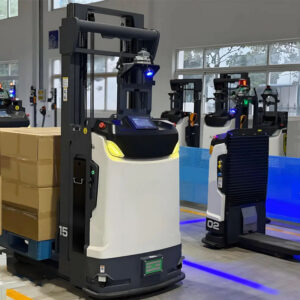
– Production Line Material Distribution: Precise transfer of parts and semi-finished products between workstations in automobile/electronics factories, adapting to mixed-model production.
– Machine Tool Loading and Unloading: Automatic picking and placing of work pieces in machining workshops, reducing manual waiting time.
– Finished Product Warehousing: Direct transfer of finished products from the production line to warehouse shelves, achieving seamless connection between production line and warehousing.
– Mold/Heavy Equipment Handling: Safe transfer of large molds and castings in heavy industry, avoiding risks of manual operation.
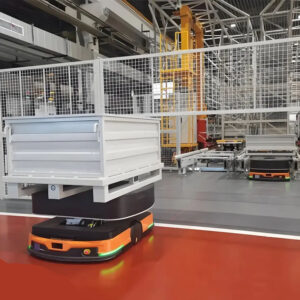
Warehousing/Logistics Scenarios
– Goods-to-Person Sorting: AGVs in e-commerce/courier warehouses transport shelves to sorters, improving picking efficiency.
– Cross-Area Transfer: Allocation of goods between different warehouse areas and functional zones of logistics centers, supporting 24/7 continuous operation.
– Reverse Logistics: Sorting of returned goods in e-commerce return warehouses and re-warehousing transfer after re-inspection.
– Cold Chain Transfer: Handling of temperature-controlled materials such as frozen food and vaccines in cold storage
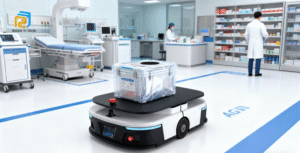
Medical/Pharmaceutical Scenarios
– Hospital Material Distribution: Aseptic transfer of operating room instruments, medicines, test samples, and medical records, reducing cross-infection among personnel.
– Pharmaceutical Workshop Handling: Closed transfer of pharmaceutical raw materials and intermediates in GMP-compliant workshops, meeting regulatory requirements for pharmaceutical production.
– Laboratory Sample Transfer: Safe transfer of precision instruments and experimental samples in universities/research institutions, avoiding collision damage.
Special/Niche Scenarios
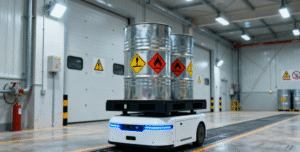
– Hazardous Chemical Transportation: Explosion-proof AGVs in chemical parks and oil-gas areas, undertaking the transfer of hazardous chemicals and flammable/explosive materials.
– Clean Environment Operation: Anti-static AGVs in electronic clean rooms and semiconductor workshops, transferring precision products such as chips and PCBs.
– Ports/Terminals: Unmanned stacking of containers and short-distance transfer of port goods, adapting to complex outdoor road conditions.
– Retail/Forward Warehouses: Replenishment and inventory transfer in fresh food forward warehouses and large supermarkets, improving store replenishment efficiency.
Case 1: A Certain E-commerce Warehousing Center (Latent AGVs)
Case 2: Standard Biopharmaceutical Laboratory (Explosion-proof & Clean AGVs)